



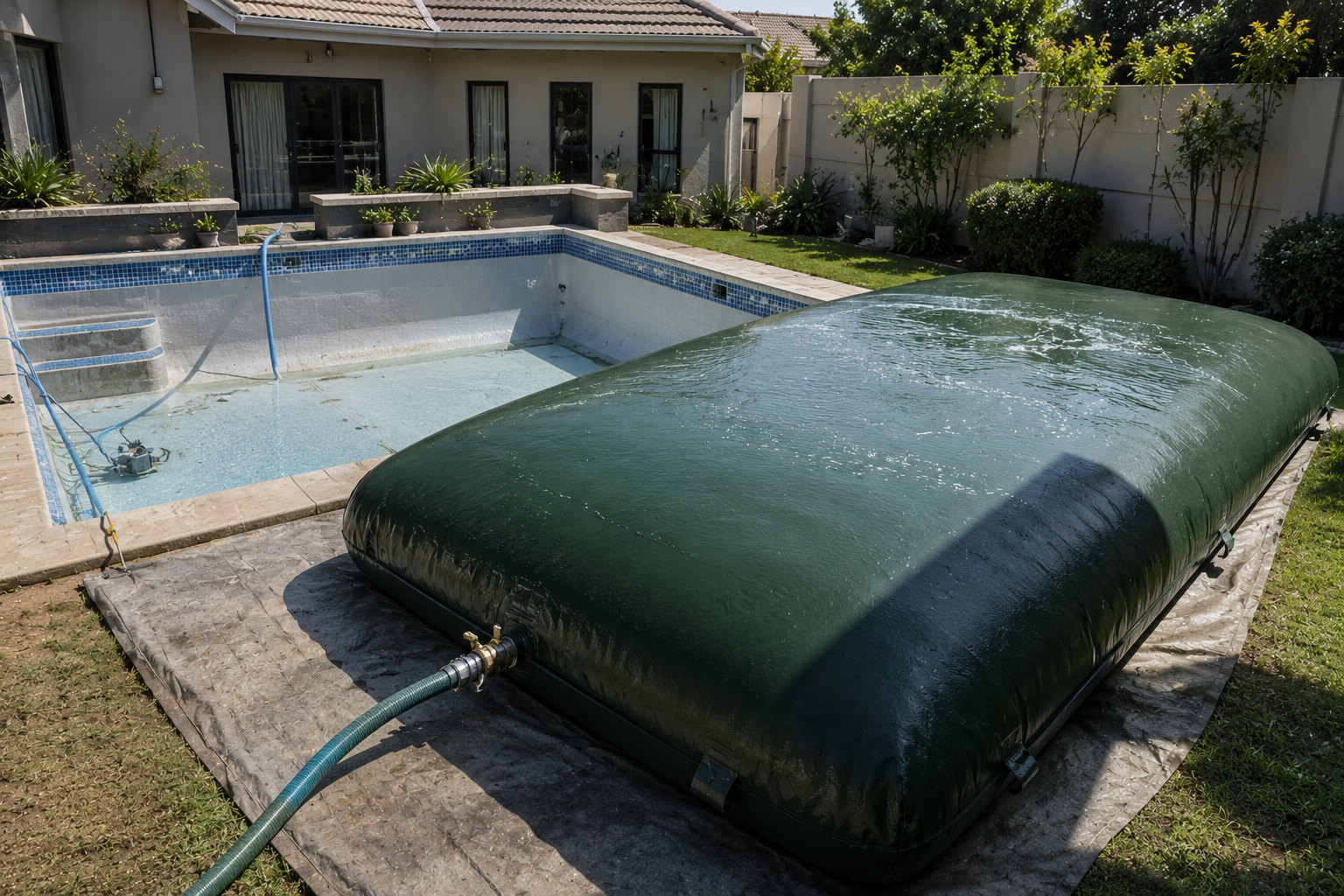
Many swimming pool repairs require the water level to be lowered or the pool to be completely emptied before work can begin. For homeowners, this often raises an immediate concern. After spending money on water, chemicals, and regular maintenance, the idea of simply draining thousands of litres away can feel wasteful and expensive.
Fortunately, draining the pool and discarding the water is not always necessary.
For many renovation and repair projects, the existing pool water can be safely stored in a specialised water bladder while the work is completed. Once the repairs are finished and the water quality has been assessed, much of that water can often be returned to the pool. This approach helps reduce water wastage, lowers refill costs, and supports more sustainable water use, which is especially important in Johannesburg where water conservation remains an ongoing priority.
Understanding how water storage bladders work and why they are used helps homeowners feel more confident about the repair process while highlighting the value of proper planning before work begins.
Protect Your Pool During Every Stage of the Repair
Fill in the form below to speak with Absolute Pools about professional swimming pool repairs and water storage solutions in Johannesburg.
Why Some Pool Repairs Require the Water to Be Removed
Not every pool repair requires the pool to be emptied.
Simple equipment repairs, minor plumbing work, or maintenance around the filtration system can often be completed while the pool remains full. However, other projects require direct access to the interior of the pool, making it impossible to work safely with water still inside.
Repairs such as resurfacing, fibreglass relining, crack repairs, replacing damaged mosaics, structural renovations, and certain leak repairs generally require the water to be removed first. The repair surfaces need to be clean, dry, and fully accessible to ensure the new materials bond correctly and the workmanship lasts for many years.
Draining the pool is therefore not simply a matter of convenience. It is often an essential part of completing the repair correctly. Attempting to rush the process or leave water in the pool where it shouldn’t be can compromise the quality of the finished repair and may lead to further problems later.
What Is a Pool Water Storage Bladder?
A pool water storage bladder is a large, heavy-duty flexible container designed to temporarily hold thousands of litres of water while repairs or renovations are carried out.
Instead of pumping the water into the municipal drainage system or allowing it to run into the surrounding property, the water is carefully transferred into the bladder and safely stored until the repair work has been completed.
These storage bladders are specifically designed for temporary water storage and can accommodate the large volumes typically found in residential swimming pools.
Once positioned on a suitable surface, the bladder expands as it fills with water, securely containing the pool water throughout the repair process.
For homeowners, the most noticeable benefit is simple: the water remains available rather than being lost, reducing the amount of fresh municipal water needed once the project is complete.
Why Saving Pool Water Makes Sense
Replacing an entire swimming pool with fresh water can be expensive, particularly for larger pools.
Beyond the cost of the water itself, homeowners also need to restore the correct chemical balance, which means purchasing additional chlorine, pH adjusters, stabilisers, and other treatment products before the pool is ready to use again.
By storing suitable pool water during repairs, much of this expense can often be reduced.
Saving water also supports responsible environmental practices. Johannesburg has experienced periods of water restrictions and supply challenges over the years, making water conservation an important consideration for many homeowners.
Although fresh water is sometimes unavoidable, reusing suitable existing water where possible helps reduce unnecessary consumption while making the renovation process more environmentally responsible.
Is Every Pool Suitable for Water Storage?
Although water storage offers many advantages, it is not appropriate for every project.
The condition of the existing pool water plays an important role in determining whether it can be reused.
If the water is heavily contaminated, contains excessive algae, has poor chemical balance, or has deteriorated significantly before repairs begin, replacing it with fresh water may be the better long-term solution.
Similarly, some repairs involve materials or processes that make reusing the existing water impractical.
An experienced pool contractor will assess both the condition of the water and the type of repair being carried out before recommending whether storage is worthwhile.
This ensures the decision is based on what is best for both the repair and the long-term health of the swimming pool.
Planning a Pool Renovation?
Complete the form below to discuss your project with Absolute Pools and find out whether water storage is suitable for your swimming pool.
How Water Is Safely Returned to the Pool
Once repairs have been completed and the new finishes have cured where necessary, the stored water is not simply pumped straight back into the pool without consideration.
The condition of the water is first assessed to ensure it remains suitable for reuse.
Depending on the type of repair, additional filtration, chemical balancing, or partial replacement with fresh water may be recommended before normal swimming resumes.
This careful approach helps maintain water quality while protecting both the newly completed repairs and the pool equipment.
Returning the water correctly is just as important as storing it correctly.
Protecting the Water During Storage
Proper storage involves more than simply filling a bladder with water.
The location of the bladder should be carefully selected to provide stable support and minimise the risk of damage while the repairs are being completed.
The water should also remain protected from unnecessary contamination throughout the storage period.
Professional contractors plan the storage process before work begins, ensuring there is adequate space on the property and that the bladder can remain safely positioned until the project has been completed.
Good planning reduces risks while helping the entire renovation proceed smoothly.
Water Storage Is Part of a Professional Repair Process
Using a water storage bladder demonstrates careful planning rather than simply offering an additional service.
Professional pool repairs involve considering every stage of the project, including protecting the property, managing water responsibly, maintaining safety, and minimising disruption for the homeowner.
Water storage is one example of how experienced contractors look beyond the repair itself to improve the overall customer experience.
Rather than viewing the pool only as a construction project, they consider the practical, environmental, and financial implications of every decision made during the renovation.
What Homeowners Should Expect Before Repairs Begin
One of the best ways to avoid unexpected surprises is to discuss water management before any work starts.
Your contractor should explain whether the pool needs to be emptied, whether the existing water can be stored, how long the repairs are expected to take, and what will happen when the project is complete.
Having these conversations early allows homeowners to understand the process and prepare for the temporary changes that will take place while the renovation is underway.
Clear communication also helps ensure there are no misunderstandings about the scope of the work or the reasons behind each step of the repair.
Professional Planning Protects Your Investment
A swimming pool represents a significant investment, and every stage of a repair project should be managed with the same level of care.
Using a water storage bladder when appropriate is just one example of how thoughtful planning can reduce waste, protect resources, and improve the overall renovation experience.
Whether your swimming pool requires resurfacing, structural repairs, fibreglass relining, or a complete renovation, working with experienced professionals helps ensure every aspect of the project is completed properly from start to finish.
By considering both the repair itself and the management of the pool water, homeowners benefit from a more efficient, environmentally responsible, and cost-effective renovation process.
Expert Pool Repairs and Water Storage Solutions in Johannesburg
Fill in the form below to speak with Absolute Pools about professional pool repairs, renovations, and temporary water storage solutions designed to protect both your swimming pool and your investment.


Comments are closed