



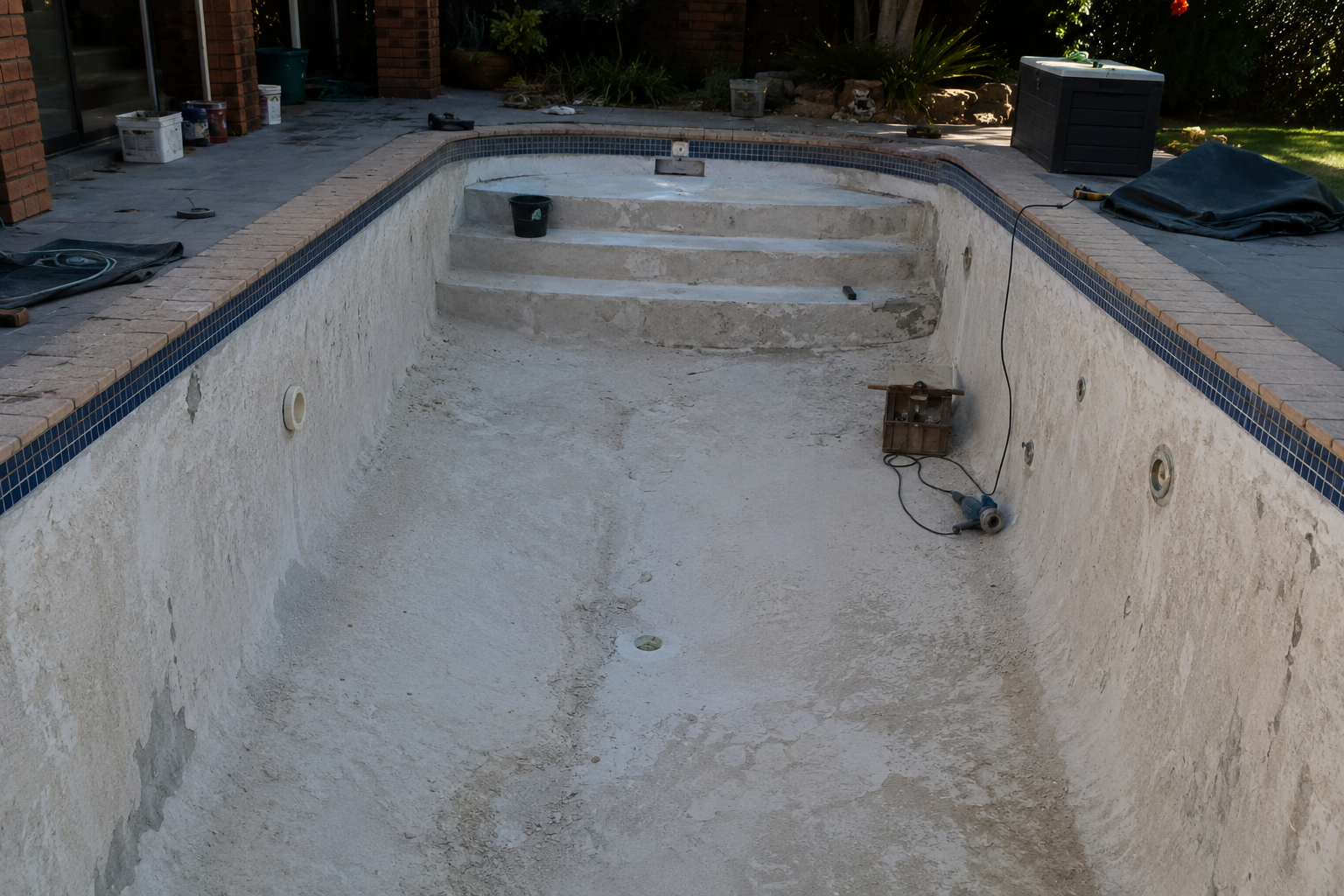
An old swimming pool can often be brought back to life without removing the entire structure and starting again. A pool that has become rough, faded, stained or difficult to maintain may simply need the right renovation rather than a complete replacement.
The challenge is knowing what that renovation will cost.
There is no standard price for renovating a swimming pool in Pretoria because the work required can vary considerably from one property to another. A pool with a sound structure and a worn surface is a relatively straightforward project. Another pool might have cracks, leaks, damaged coping, outdated equipment and years of patch repairs underneath the surface.
The finish you choose also makes a difference. Resurfacing, re-marbelite and fibreglass relining each have different installation requirements, and the surrounding areas can add another layer to the budget if paving, coping, mosaics or other features need attention.
That means a useful renovation budget starts with the condition of the existing pool rather than a generic price per pool.
If you’re considering renovating a swimming pool in Pretoria, the figures and information below will give you a better idea of where the money goes, which parts of the project can increase the cost and what to look for when comparing quotations.
Get a Pool Renovation Quote in Pretoria
Tell us about your pool and Absolute Pools will help you determine what needs to be done.
What Is the Average Cost of Pool Renovation in Pretoria?
A straightforward swimming pool renovation can start from around R30,000 to R60,000, particularly where the existing structure is in reasonable condition and the main requirement is restoring the interior surface.
A more substantial renovation can fall within the region of R60,000 to R120,000 or more. This might involve extensive surface preparation, fibreglass relining or resurfacing, repairs to damaged areas and selected improvements to the pool.
A larger renovation involving several components can reach R120,000 to R250,000 or more. This type of project may include major surface work together with structural repairs, new coping, paving, equipment replacement, lighting and other changes to the pool area.
These figures are intended as rough budgeting guidelines, not fixed Pretoria prices.
The difference between a R50,000 renovation and a R150,000 renovation isn’t necessarily the contractor charging more for the same work. The projects themselves may be completely different.
For example, a relatively small pool with a tired but stable interior may only require preparation and resurfacing. A larger pool with extensive deterioration could require considerably more labour and materials before the new finish can even be installed.
The best way to establish the actual cost is to have the pool assessed and receive a quotation based on its dimensions, condition, access and the work you want completed.
Why Pool Renovation Costs Vary So Much
The phrase “pool renovation” covers a surprisingly wide range of work.
Someone might use it to describe replacing an old marbelite finish. Someone else might mean a complete transformation involving fibreglass relining, new coping, paving, lighting and equipment.
Both are pool renovations, but they are obviously not going to cost the same.
The condition of the existing pool is one of the biggest variables. A surface that has simply faded over time is a different problem from a surface that is loose, cracked or badly deteriorated.
Then there is the question of what happens beneath the finish.
A pool may look reasonably good while still having problems with plumbing or water loss. Once the pool is drained and the existing surface is examined properly, additional work may become necessary.
The materials selected also affect the price. A traditional resurfacing project and a fibreglass relining project involve different materials, preparation requirements and installation processes.
Then there are the extras.
Coping, paving, mosaics, pool lights, pumps, filters, chlorinators and other equipment can all form part of a renovation, but they don’t need to be included in every project.
This is why an accurate quotation needs to be based on the actual pool rather than a generic renovation package.
The Size of the Pool Affects More Than the Amount of Water
Pool size is an obvious factor, but it affects renovation costs in several ways.
A larger pool has a greater internal surface area, meaning more material is required to restore or replace the finish. There is also more surface to prepare, clean, repair and inspect.
The depth matters too.
Two pools with the same length and width can have different internal surface areas if one is significantly deeper. Steps, benches, ledges and other features also add surface area and can make preparation more complicated.
Shape can make a difference as well.
A straightforward rectangular pool is relatively easy to measure and work on. Curved pools, unusual shapes and pools with several integrated features can require more detailed preparation and finishing.
None of this means that a complicated pool cannot be renovated. It simply means that the renovation needs to be priced according to the actual work involved.
This is especially relevant when comparing online prices. A “from” price can be useful for giving you a rough starting point, but it cannot account for the dimensions and design of your particular swimming pool.
The Existing Pool Surface Needs to Be Assessed Before Renovation
A worn pool surface doesn’t necessarily mean the entire pool needs the same treatment.
Some areas may be perfectly sound while others have deteriorated significantly. Previous repair work may also have left different materials across different sections of the pool.
Before installing a new finish, these conditions need to be considered.
A deteriorated marbelite surface may need to be prepared extensively before resurfacing. Loose sections need to be dealt with rather than simply covered. Areas affected by previous repairs may need special attention to ensure the new finish bonds correctly.
Stubborn staining can also require investigation.
Some staining is simply the result of years of use and chemical exposure. Other marks can be associated with water chemistry, metal contamination or deterioration of the existing surface.
The point is that the old finish isn’t just something to cover up.
It forms the foundation for the renovation, and the quality of the preparation can have a major effect on how well the new finish performs.
A renovation that spends money on premium materials but rushes the preparation isn’t necessarily a good investment.
Cracks and Structural Problems Can Increase the Cost
Cracks are common in ageing swimming pools, but they shouldn’t all be treated as the same problem.
A small surface crack may be relatively straightforward to repair. A crack that keeps returning or appears alongside other signs of movement requires much closer attention.
The same applies to leaks.
If a pool is losing water, it is important to establish whether the problem is coming from the pool shell, plumbing, fittings or another part of the system. Installing a new surface without addressing the source of a leak can leave the homeowner with a newly renovated pool that still loses water.
Structural repairs can therefore change the scope of a renovation significantly.
This doesn’t mean every crack will turn into a major expense. It means the condition of the pool needs to be properly understood before the final renovation method and budget are decided.
This is one of the strongest arguments for having an inspection before committing to a renovation.
Fibreglass Relining Can Be a Major Part of the Budget
Fibreglass relining has become a popular option for renovating older swimming pools because it creates a smooth, non-porous interior without requiring the existing pool to be demolished.
The process involves preparing the existing pool and installing a new fibreglass lining over the prepared surface. The quality of that preparation is particularly important because the new lining needs a suitable surface to bond to.
The cost depends on the size and shape of the pool, its existing condition, the amount of preparation required and whether repairs need to be completed before the fibreglass is installed.
It is therefore not particularly useful to say that fibreglass relining simply costs a fixed amount per pool.
A small, accessible pool with a relatively straightforward surface can be a very different job from a large pool that has years of deterioration and requires extensive preparation.
The finish also has practical advantages that should be considered alongside the initial price. Fibreglass creates a smooth surface that is generally easier to clean and less hospitable to algae than rougher traditional pool finishes.
That can make a difference to ongoing maintenance after the renovation.
Re-Marbelite and Resurfacing Can Offer a Different Route
Fibreglass isn’t the only way to restore an ageing pool.
Re-marbeliting or resurfacing can be an appropriate option when the existing pool structure is sound and the homeowner wants to restore its interior with a traditional pool finish.
Marbelite has been used extensively in South African swimming pools and remains a familiar choice for renovations. It can give an older pool a fresh appearance while maintaining the character of the existing design.
The choice between fibreglass relining and traditional resurfacing comes down to the condition of the pool, the finish you prefer and what you want from the renovation in the years ahead. Thedifferences between pool resurfacing, re-marbelite and fibreglass relining become particularly important when you’re deciding how much of your renovation budget to put towards the pool’s interior.
Get a Pretoria Pool Renovation Assessment
Tell us what needs attention and we’ll help you plan the renovation.
What Happens If the Pool Needs Repairs Before the New Finish?
A renovation sometimes reveals work that needs to happen before the new finish can be installed.
This can include repairing cracks, addressing leaks, replacing damaged fittings or correcting problems with sections of the existing pool.
It can be tempting to skip these repairs in an effort to keep the renovation within budget.
That can be a costly decision.
The purpose of renovating a pool is to create a durable improvement. If a problem is left underneath a new finish, the renovation may not deliver the result you expected.
For example, if water is escaping through an unresolved leak, installing a beautiful new surface doesn’t solve the underlying issue.
Repairs should therefore be considered part of the renovation rather than an unnecessary extra whenever they are necessary to protect the finished work.
The good news is that not every pool requires major repairs. The inspection should determine which issues actually need attention and which can safely be left alone.
Pool Coping Can Change the Look of the Finished Renovation
A pool’s interior isn’t the only thing that ages.
The coping around the edge can become cracked, loose or stained. Over time, the surrounding paving can also shift, deteriorate or simply begin looking dated.
If you’re spending money on a new pool finish, it is worth looking at these areas before the renovation begins.
That doesn’t mean everything needs replacing.
If the existing coping and paving are still in good condition, they can often remain. But if they are already showing significant deterioration, renovating them at the same time can create a much more cohesive result.
The choice of coping can also affect the character of the pool.
Modern finishes can create a cleaner architectural appearance, while more traditional materials can complement established gardens and older homes.
The cost will depend on the material, amount of area being replaced and preparation required.
Pool Equipment Should Be Checked Before You Finalise the Budget
A pool renovation is also a good time to look at the equipment that keeps the water clean and circulating.
The pump and filtration system may still be operating, but age and wear can affect efficiency and reliability. Chlorinators, lights and other components can also become outdated or require replacement.
It doesn’t make sense to replace perfectly good equipment simply because the pool is being renovated.
At the same time, it can be frustrating to complete a major renovation and then discover that an old pump fails shortly afterwards.
An assessment of the equipment can help separate the things that genuinely need replacing from upgrades that can wait.
If a replacement is necessary, it can be incorporated into the renovation budget from the beginning rather than becoming an unexpected expense later.
Difficult Access Can Affect the Practical Cost of Renovation
The pool’s location on the property can make a difference to how the work is carried out.
A pool with easy access from the driveway is straightforward to work on. A pool positioned behind a narrow passage, up a flight of steps or in an area surrounded by established landscaping can require more planning and manual handling.
Materials and equipment still need to get to the pool, and waste needs to leave the property.
These practical details don’t necessarily add a huge amount to every project, but they can affect labour requirements and the time needed to complete certain stages.
A site inspection is therefore useful for more than looking at the pool itself. It also gives the renovation team an opportunity to understand the property and identify potential logistical challenges before work begins.
Should You Renovate the Pool or Replace It?
This is a question worth asking before spending money on an older pool.
If the underlying structure is sound, renovation can make much more sense than demolishing the pool and constructing a completely new one.
You retain the existing structure and footprint while addressing the parts that have deteriorated.
A new finish can dramatically change the appearance of the pool. New coping, paving and equipment can take the transformation even further.
But there are situations where renovation isn’t the most sensible option.
A pool with serious structural problems, extensive movement or a design that no longer works for the property may require more substantial reconstruction.
The right decision comes down to the condition of the existing pool and what you want from the finished project.
A professional assessment can help establish whether renovation is a sensible investment or whether a more extensive solution deserves consideration.
How to Compare Pool Renovation Quotations
Once you’ve received several quotations, don’t immediately choose the lowest number.
Start by comparing what each company has actually included.
One quotation may include extensive preparation while another assumes the existing surface is ready. One may include crack repairs while another lists them as additional work. One may include new coping or equipment while another covers only the pool interior.
Those differences can make a large quotation appear expensive even when it offers considerably more work.
Ask questions about anything that isn’t clear.
Find out what materials will be used, what preparation is included, how additional repairs will be handled and what is excluded from the quoted amount.
A detailed quotation makes it much easier to understand where your money is going.
It also reduces the chance of unpleasant surprises once the renovation is underway.
Planning a Pool Renovation Around Your Budget
A good renovation doesn’t have to involve changing everything.
Start with the problems that actually need to be addressed.
If the surface is the main issue, focus on that. If there is a leak, deal with the leak. If the equipment is reaching the end of its useful life, consider whether replacing it now makes more sense than waiting.
Once the essential work has been identified, you can decide which additional improvements are worthwhile.
Perhaps new coping would complete the look. Maybe lighting would make the pool more enjoyable in the evenings. Perhaps the paving is still perfectly good and doesn’t need touching at all.
This approach gives you control over the renovation rather than allowing the project to grow simply because there are lots of possible upgrades available.
It’s also worth keeping a reasonable allowance for unexpected work, particularly when renovating an older pool. Some problems only become visible once the existing surface has been removed or properly examined.
That doesn’t mean accepting unlimited additional costs. It means having a realistic understanding of what can happen when renovating an ageing structure.
Why Absolute Pools Is a Go-To Choice for Pool Renovation in Pretoria
A pool renovation is not always one simple job.
The pool may need a new surface, but there may also be cracks that need attention, a leak that needs to be investigated, old equipment that is no longer reliable or coping that has deteriorated over the years.
Absolute Pools handles a range of pool renovation and repair work in Pretoria, including resurfacing, re-marbelite, fibreglass relining, fibreglass repairs, leak repairs and equipment repairs. This allows the renovation to be approached as a complete project rather than treating each problem as an isolated issue.
The company works across Pretoria and surrounding areas, including Pretoria East, Waterkloof, Brooklyn, Lynnwood, Moreleta Park and Garsfontein.
That local experience matters because renovation work is very much dependent on the individual pool. The right solution isn’t necessarily the newest finish or the cheapest option. It is the one that suits the condition of the pool and delivers the result you’re looking for.
Whether the pool needs a relatively straightforward surface renovation or a much more comprehensive restoration, Absolute Pools can assess the existing pool and help determine the most appropriate way forward.
A Renovation Can Give an Old Pool a Completely New Lease on Life
Pool renovation costs in Pretoria can range from a relatively modest surface restoration to a major project involving structural repairs, fibreglass relining or resurfacing, new coping, paving and equipment.
The biggest mistake is trying to determine the price before determining the scope.
The condition of the pool comes first.
Once you know what needs to be repaired, what needs replacing and what can remain, the budget becomes much easier to understand.
A properly renovated pool can look completely different from the pool you started with. More importantly, it can be easier to maintain, more comfortable to use and better suited to the way you want to enjoy your outdoor space.
If your pool has become a source of constant repairs or has simply reached the point where the old finish is no longer doing it justice, renovation may be the opportunity to bring it back into shape without starting from scratch.
Start Your Pool Renovation in Pretoria
Fill in the form below to speak with Absolute Pools to start your pool renovation project


Comments are closed