



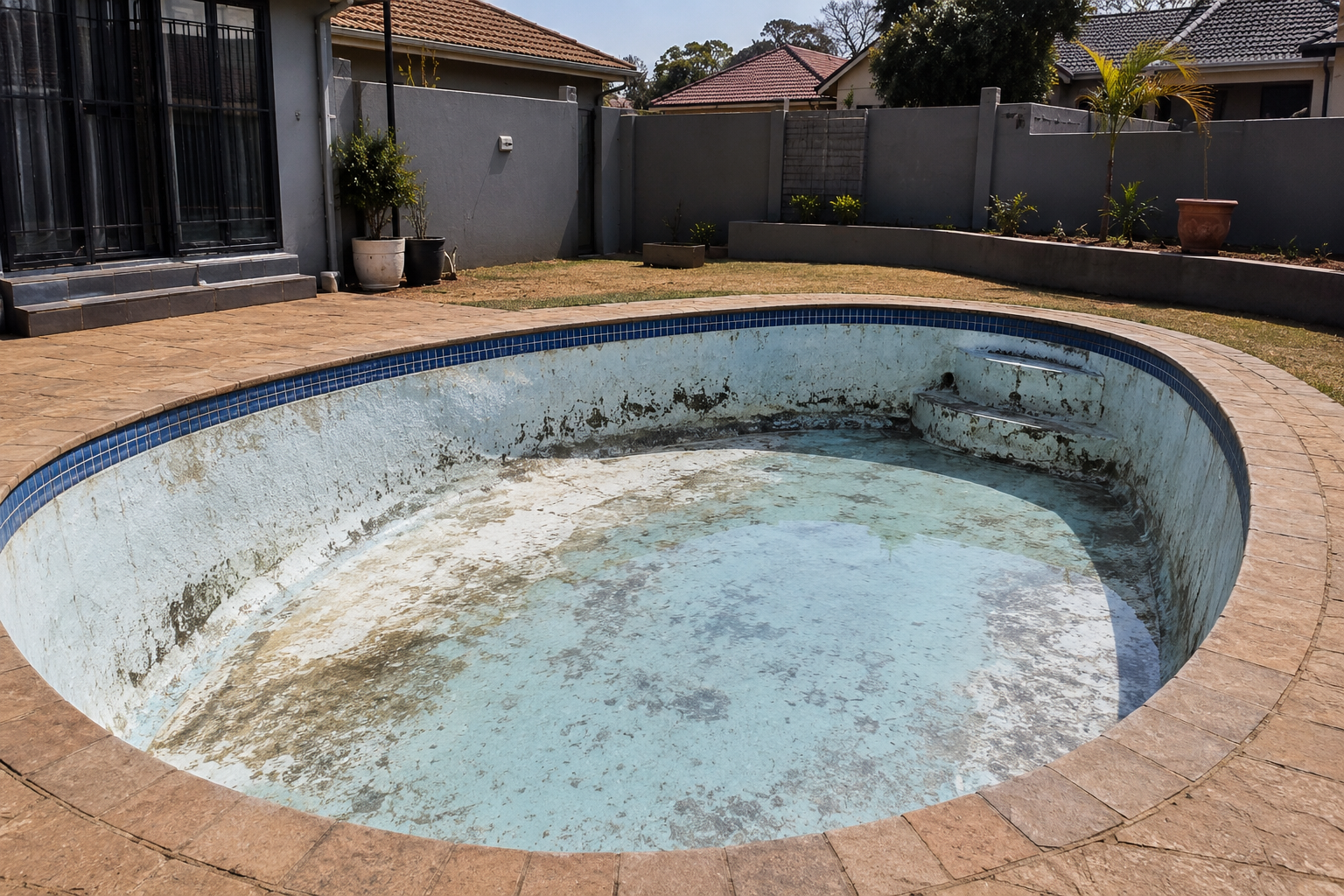
A swimming pool doesn’t suddenly reach the point where it needs resurfacing overnight. In most cases, the changes happen so gradually that homeowners barely notice them at first. What starts as a small rough patch underfoot, a few stubborn stains that refuse to disappear, or a tiny crack in the finish can slowly develop into much larger problems if left unattended.
Many pools across Gauteng have been part of family homes for years, enduring long summers, changing weather conditions, regular use, and constant exposure to pool chemicals. Over time, even a well-maintained pool begins to show signs of ageing. While routine maintenance helps extend the life of the surface, it cannot prevent normal wear forever.
Knowing when it’s time to resurface your pool can help you avoid more expensive repairs later while restoring the appearance, comfort, and performance of your swimming pool. The key is recognising the early warning signs before the underlying surface deteriorates further.
If you’ve started noticing changes in the way your pool looks or feels, it may be worth taking a closer look at what those signs could mean.
Restore Your Pool With Professional Resurfacing
Fill in the form below to speak with Absolute Pools about professional pool resurfacing solutions for homes across Gauteng.
The Pool Surface Feels Rougher Than It Used To
One of the earliest and most noticeable signs that a swimming pool may need resurfacing is a change in the texture of the surface.
A pool that once felt smooth underfoot can gradually become rough, coarse, or abrasive as the years pass. Many homeowners first notice this while cleaning the pool, walking on the steps, or spending long periods swimming. Children are often the first to complain because rough surfaces can become uncomfortable on sensitive feet and hands.
This roughness develops as the protective finish naturally wears away. Years of exposure to sunlight, balanced but persistent pool chemicals, and the continuous movement of water slowly erode the surface. As the finish ages, the underlying material becomes more exposed, creating the uneven texture that many older pools develop.
Apart from affecting comfort, a rough surface also creates tiny pockets where dirt, algae, and calcium deposits can collect more easily. This means homeowners often find themselves brushing the pool more frequently without achieving the same clean appearance they once enjoyed.
If the roughness continues to worsen despite regular maintenance, resurfacing is often the most effective way to restore both the appearance and comfort of the swimming pool.
Stains No Longer Respond to Cleaning
Every swimming pool develops minor stains from time to time.
Leaves, minerals in the water, metal deposits, organic material, and normal everyday use can all leave marks on the pool surface. In most cases, these stains can be removed through proper cleaning and balanced water chemistry.
The situation changes when stains become permanent.
As pool finishes age, they become increasingly porous. Instead of remaining on the surface where they can easily be removed, dirt and minerals begin penetrating deeper into the finish itself. Even after brushing, vacuuming, and adjusting the water chemistry, the stains remain visible.
Many homeowners assume the water is dirty when, in reality, it is the ageing surface that has changed.
Persistent staining often makes an otherwise well-maintained pool appear neglected, even though the water is perfectly clean.
If you’ve reached the point where no amount of cleaning seems to improve the appearance of the pool, resurfacing may be a more practical long-term solution than continuing to fight stains that have become embedded within the finish.
Cracks Are Starting to Appear
Not every crack is a sign of major structural failure, but every crack deserves attention.
Small hairline cracks may develop naturally as a pool ages, while larger cracks can result from movement within the surrounding ground or changes in the underlying structure. The important thing is understanding what caused the crack before deciding on the appropriate repair.
One of the biggest mistakes homeowners make is treating cracks as purely cosmetic issues.
Although a crack may initially appear small, it creates a pathway for water to penetrate beneath the surface. Over time, this moisture can contribute to further deterioration of the finish and may eventually affect other areas of the pool if left unresolved.
Some cracks require localised repairs, while others indicate that the existing finish has reached the end of its service life and resurfacing would provide a more effective long-term solution.
Having the pool professionally assessed allows the condition of both the surface and the underlying structure to be evaluated before the problem becomes more extensive.
Pieces of the Surface Are Chipping or Peeling Away
A healthy pool finish should remain firmly bonded to the underlying structure.
When sections begin lifting, flaking, or breaking away, it is usually a sign that the surface has deteriorated beyond normal maintenance.
This damage often starts around steps, corners, waterlines, or areas that experience the greatest amount of foot traffic before gradually spreading across larger sections of the pool.
As more of the finish separates from the underlying surface, the pool not only becomes less attractive but also increasingly vulnerable to additional damage.
Sharp edges may develop where material has broken away, creating an uncomfortable swimming experience while making it easier for water to penetrate beneath the remaining finish.
Although isolated areas can sometimes be repaired, widespread peeling or delamination usually indicates that resurfacing should be considered before further deterioration occurs.
Your Pool Is Beginning to Look Older Than the Rest of Your Property
Many homeowners decide to resurface their swimming pool even before significant structural problems develop.
As homes are renovated over the years, outdoor entertainment areas often receive new paving, modern landscaping, updated lighting, fresh paint, and contemporary outdoor furniture.
The swimming pool, however, may still reflect the appearance it had twenty or thirty years ago.
An ageing finish can make the entire backyard feel tired, even when every other part of the property has been beautifully upgraded.
Resurfacing provides an opportunity not only to restore the condition of the pool but also to modernise its appearance so it complements the rest of the outdoor living space.
New finishes, updated mosaics, and refreshed coping can dramatically transform the entire backyard, helping the pool once again become the centrepiece of the property rather than the feature that looks most dated.
Give Your Pool a Fresh New Finish
Complete the form below to discuss professional pool resurfacing with Absolute Pools and discover the best renovation solution for your swimming pool.
Waiting Too Long Can Increase Repair Costs
One of the biggest misconceptions about pool resurfacing is that it is purely cosmetic.
In reality, the finish serves as an important protective layer for the swimming pool. As it deteriorates, the underlying structure becomes increasingly exposed to water, weather, and everyday wear.
What begins as a rough surface or a few isolated areas of damage can gradually develop into more extensive repairs if the finish continues deteriorating.
Water may penetrate beneath damaged areas, cracks can expand over time, and loose sections of the finish may continue separating from the pool structure.
Addressing resurfacing at the appropriate time often helps prevent more expensive structural repairs later while restoring the swimming pool before the damage becomes significantly more difficult to repair.
Is Resurfacing the Right Solution?
Not every swimming pool requires complete resurfacing.
In some cases, localised repairs may be all that’s needed to restore the affected area. In others, resurfacing provides the most practical long-term solution because it addresses widespread wear rather than isolated damage.
The best approach depends on the age of the pool, the condition of the existing finish, the extent of the deterioration, and your long-term plans for the property.
A professional inspection allows experienced pool specialists to assess the condition of the surface and recommend the most suitable solution based on the pool itself rather than applying the same recommendation to every project.
Choosing the right solution at the right time helps extend the life of your swimming pool while ensuring it continues to provide many more years of enjoyment.
Expert Pool Resurfacing in Gauteng
Fill in the form below to speak with Absolute Pools about restoring your swimming pool with professional resurfacing solutions designed to improve both appearance and long-term durability.


Comments are closed