



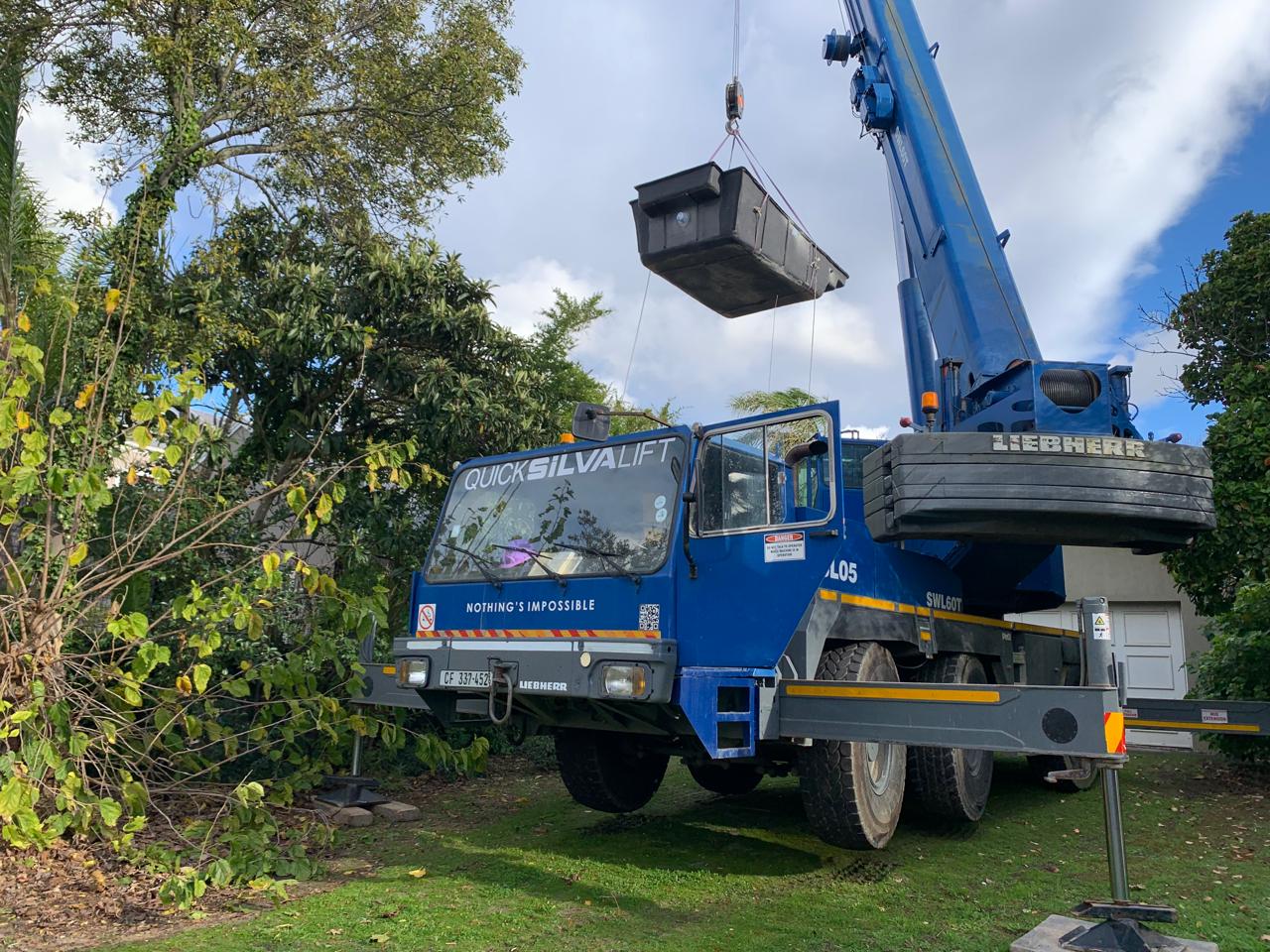
One of the biggest surprises for homeowners planning a fibreglass swimming pool is discovering that a crane may be needed to complete the installation. It’s not something most people think about when choosing a pool design, yet it can become one of the most important parts of the entire project.
If you’ve been told that your pool will need to be lifted into position by a crane, there’s no reason to be concerned. Crane-assisted fibreglass pool installations are a common and safe solution for properties where access to the backyard is limited or where traditional installation methods simply aren’t possible.
Rather than trying to force heavy equipment through narrow spaces or risk damaging your property, a crane allows the fibreglass pool shell to be lifted carefully over walls, houses, garages, or other obstacles before being lowered into the prepared excavation.
While the lift itself often takes only a short time, a successful crane-assisted installation depends on careful planning long before the crane arrives. Understanding how the process works and what needs to be considered beforehand helps homeowners prepare for installation day and ensures everything runs as smoothly as possible.
Plan Your Fibreglass Pool Installation With Confidence
Fill in the form below to speak with Absolute Pools about your fibreglass pool project and receive expert advice on the safest and most efficient installation method for your property.
Why Is a Crane Sometimes Necessary?
Every property is different.
Some homes have wide side entrances that allow excavation machinery and installation equipment to reach the backyard without difficulty. Others have boundary walls, neighbouring buildings, garages, mature trees, or narrow passages that make access almost impossible.
A fibreglass pool shell arrives at your property as a single, fully manufactured structure.
Unlike a concrete swimming pool, which is built piece by piece on-site, the fibreglass shell must be delivered intact and placed accurately into the excavation.
When there isn’t enough space to move the shell through the side of the property, a crane becomes the safest and most practical solution.
The crane lifts the shell directly from the delivery vehicle, carries it safely over any obstacles, and lowers it into its final position with remarkable precision.
Although this may sound like a complicated operation, experienced pool builders and crane operators perform these installations regularly using carefully planned lifting procedures.
Every Property Needs to Be Assessed First
One of the most important stages of a crane-assisted installation happens before construction even begins.
A site assessment allows the installation team to evaluate whether a crane will be required and determine the safest lifting strategy.
During this visit, several factors are considered.
The team looks at the position of the house, the location of the excavation, surrounding buildings, neighbouring properties, trees, overhead power lines, and available access for the crane itself.
Measurements are taken to determine the lifting distance, the height the shell needs to clear, and the safest location for the crane to operate.
This planning process reduces unexpected delays and ensures the correct crane is booked for the installation.
Skipping this stage or relying on assumptions can create unnecessary complications on installation day.
Choosing the Right Crane
Not every crane is suitable for every project.
The size and lifting capacity required depend on several factors, including the weight of the fibreglass shell, the distance between the crane and the excavation, and the height the pool needs to be lifted.
Larger properties with difficult access may require cranes with greater lifting capacity or longer booms.
Using equipment that is too small is not only inefficient but also compromises safety.
Experienced pool builders work closely with professional crane operators to ensure the correct equipment is selected before installation begins.
This careful planning helps the lift proceed smoothly while protecting both the property and the pool shell.
Preparing Your Property Before the Crane Arrives
Installation day runs much more efficiently when the property has been properly prepared beforehand.
The crane needs enough space to park and operate safely.
Depending on the size of the equipment, temporary parking restrictions or access arrangements may need to be considered.
Outdoor furniture, trailers, vehicles, and other movable items should be cleared from areas where the crane will be positioned.
If tree branches interfere with the lifting path, they may need to be trimmed before installation day.
It is also worth informing neighbours if the crane will temporarily affect access to nearby driveways or roads.
These small preparations help minimise delays and allow the installation team to focus on completing the lift safely.
Weather Can Influence Installation Day
Although crane-assisted pool installations are carefully scheduled, weather conditions can sometimes affect the final timeline.
Strong winds are one of the biggest concerns during lifting operations.
Because a fibreglass pool shell has a large surface area, excessive wind can make it more difficult to control while it is suspended.
Heavy rain may also create challenges by softening the ground where the crane needs to operate or reducing visibility during the lift.
For these reasons, experienced installation teams monitor weather forecasts closely before installation day.
If conditions are not suitable, the lift may be rescheduled to ensure the safety of everyone involved.
While homeowners are naturally eager to see the project completed, waiting for favourable weather is always the responsible decision.
What Happens on Installation Day?
Installation day is often one of the most exciting moments of the entire project.
Once the excavation has been completed and the foundation has been prepared, the fibreglass shell arrives on-site.
The crane operator works closely with the installation team to attach specialised lifting straps to the shell.
Before the lift begins, final safety checks are carried out and communication between the crane operator and ground crew is confirmed.
The shell is then lifted slowly from the delivery vehicle and guided carefully over the property.
Watching a complete swimming pool suspended above a house is certainly an impressive sight, but every movement is controlled and deliberate.
Once positioned above the excavation, the shell is lowered gradually while the installation team guides it into its exact location.
Precision is extremely important.
Even small adjustments during this stage help ensure the pool sits perfectly level before plumbing and backfilling begin.
Although the lift itself may only take a relatively short time, it represents the result of extensive planning completed well before installation day.
Start Your Pool Project the Right Way
Complete the form below to discuss your fibreglass pool installation with Absolute Pools and let our experienced team handle every stage of the project with confidence.
How Homeowners Can Help the Installation Run Smoothly
Although the installation team manages the technical aspects of a crane-assisted fibreglass pool installation, homeowners also play an important role in ensuring the day runs as planned.
One of the most helpful things you can do is make sure the installation team has clear access to the property. Vehicles should be moved away from the crane’s working area, and any outdoor furniture, decorative pots, or movable items should be relocated before the team arrives.
If your property is situated within a security estate or complex, it is also worth notifying the estate management in advance. Some estates require permission for heavy vehicles or cranes to enter, while others have restrictions on operating hours. Taking care of these arrangements beforehand helps avoid unnecessary delays on installation day.
It is equally important to keep children and pets safely indoors while the crane is operating. Although the lifting process is carefully controlled by trained professionals, reducing activity around the work area allows the installation team to focus entirely on completing the lift safely.
Maintaining good communication with your pool builder before the installation date is one of the simplest ways to ensure everything runs smoothly. If there are any changes to your property, access, or project requirements, sharing this information early helps the team prepare accordingly.
What Happens After the Pool Has Been Positioned?
Once the fibreglass pool shell has been successfully lowered into the excavation, the project is far from complete.
The installation team carefully checks that the pool is sitting perfectly level before moving on to the next stages. Even small adjustments at this point are important because they help ensure the pool performs properly for many years.
Plumbing connections are then completed, allowing the circulation system to operate efficiently once the pool is filled. At the same time, suitable backfilling material is placed around the outside of the shell while water is gradually added inside the pool. This balanced approach helps support the shell evenly and protects its structural integrity.
Once the backfilling has been completed, the filtration equipment, pump, and other components are installed and tested. The team then checks that everything is operating correctly before completing the surrounding finishes, which may include coping, paving, or landscaping, depending on the project.
By the time these final stages are complete, the dramatic crane lift has become just one part of a carefully planned installation that transforms an empty section of your garden into a beautiful new swimming pool.
Safety Is Always the Highest Priority
Whenever heavy lifting equipment is involved, safety becomes the most important consideration.
Professional crane-assisted installations follow strict lifting procedures to protect the installation team, homeowners, neighbouring properties, and the fibreglass pool itself.
Only trained personnel should work within the lifting area, and unnecessary access to the site is restricted while the crane is operating.
Children and pets should remain well away from the work zone throughout the installation.
The crane operator and installation crew communicate continuously during the lift to ensure every movement is controlled and completed safely.
These procedures may seem straightforward, but they play a vital role in delivering a successful installation.
Common Misconceptions About Crane-Assisted Installations
Some homeowners become worried when they hear that a crane will be required.
In reality, it is often the safest, fastest, and least disruptive solution available.
A crane does not mean your property is unusually difficult or that something has gone wrong.
It simply means the installation team has selected the most practical method for placing the pool shell without damaging walls, gardens, paving, or neighbouring structures.
Another common misconception is that crane-assisted installations are significantly more dangerous than standard installations.
When planned correctly and carried out by experienced professionals, crane lifts are routine operations that follow carefully controlled procedures from start to finish.
For many properties, using a crane actually reduces overall risk because it avoids attempting to manoeuvre a large fibreglass shell through restricted spaces.
Why Experience Makes All the Difference
A crane-assisted fibreglass pool installation requires more than simply hiring lifting equipment.
It involves careful planning, accurate measurements, experienced operators, and a professional installation team that understands exactly how each stage of the project fits together.
From the initial site inspection through to positioning the shell within the excavation, every decision influences the success of the installation.
Working with experienced pool builders ensures potential challenges are identified early, appropriate equipment is selected, and the installation proceeds safely and efficiently.
For homeowners, this provides peace of mind knowing that one of the most important stages of the project is being managed by professionals.
A Well-Planned Installation Leads to a Better Result
A crane-assisted fibreglass pool installation may look dramatic on the day, but behind every successful lift is careful preparation, detailed planning, and experienced workmanship.
When the right equipment is used, the property is properly prepared, and every stage is coordinated professionally, the installation becomes a smooth and efficient process.
Rather than viewing the crane as an obstacle, homeowners should see it as the safest way to position their new swimming pool exactly where it belongs.
With experienced professionals managing the project from start to finish, you can look forward to enjoying your new fibreglass swimming pool knowing it has been installed with precision, care, and the highest safety standards.
Expert Crane-Assisted Fibreglass Pool Installation
Fill in the form below to speak with Absolute Pools about your project and let our experienced team plan a safe, efficient, and professional fibreglass pool installation tailored to your property.


Comments are closed