



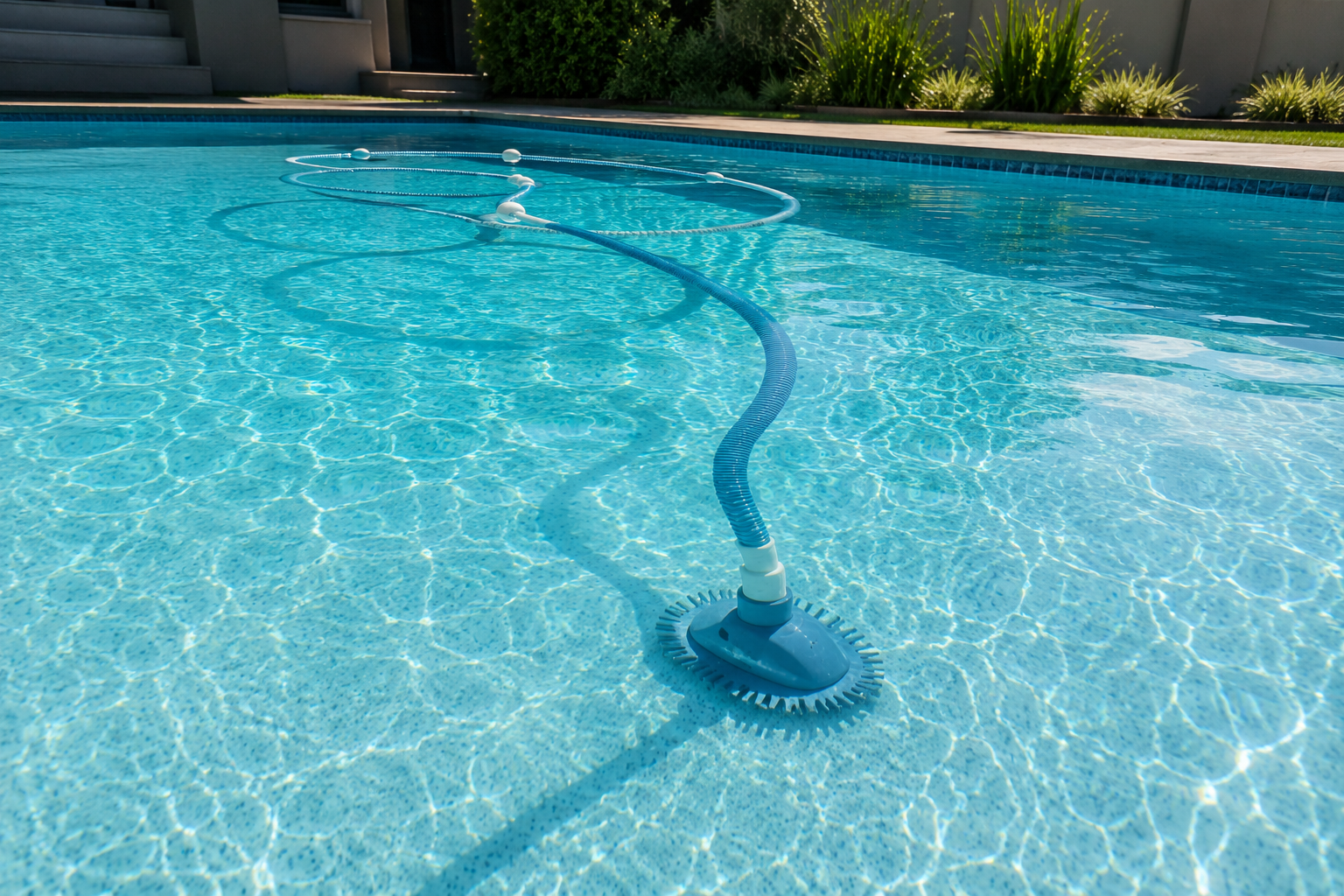
There are few things more frustrating than switching on your pool pump, expecting your pool vacuum to get to work, only to find it sitting in one spot. Whether you use a Kreepy Krauly or another automatic pool cleaner, it can be concerning when it suddenly stops moving or only crawls a short distance before coming to a halt.
The good news is that this is one of the most common pool maintenance problems homeowners experience, and it does not always mean your pool vacuum needs replacing. In many cases, the issue can be traced back to something relatively simple, such as poor water flow, a blocked hose, a dirty filter, or worn components inside the cleaner.
Of course, there are also situations where the problem points to a fault with the filtration system or pool equipment that requires professional attention.
Knowing what to check first can save you time, prevent unnecessary replacement costs, and help you get your pool cleaner working properly again. In this article, we’ll look at the most common reasons a pool vacuum stops moving, how to identify the cause, and when it’s best to call in experienced pool professionals.
Restore Your Pool Cleaning Performance
Fill in the form below to book professional pool vacuum repairs and maintenance with Absolute Pools.
Start With the Pool Pump
Before inspecting the pool vacuum itself, start with the heart of your pool’s circulation system, the pump.
Automatic pool vacuums rely on consistent water flow and suction to move around the pool. If the pump is not operating correctly, the cleaner cannot perform as it should.
Walk over to the pump while it is running and listen carefully. Does it sound normal? Is water flowing steadily through the pump basket? Can you see strong circulation returning to the pool?
If the pump is struggling, losing prime, or making unusual noises, the problem may have very little to do with the pool vacuum itself.
Low water levels in the pool can also affect the pump’s performance. If the water drops below the skimmer opening, air can enter the system, reducing suction and preventing the vacuum from moving properly.
Starting with these simple checks often helps homeowners identify the problem much faster.
Check the Pool Vacuum Hose
The hose is one of the first places to inspect if your pool cleaner has stopped moving.
Over time, hoses can develop cracks, small splits, loose connections, or blockages that reduce suction.
Even a small air leak can affect the cleaner’s ability to move across the pool floor.
Remove the hose and inspect each section carefully. Look for visible damage and make sure every connection is secure.
It is also worth checking inside the hose for leaves, small stones, twigs, or other debris that may be restricting water flow.
If the hose floats unusually high, loses suction, or fills with air bubbles, it could indicate an air leak somewhere in the system.
Replacing a damaged hose section is often far less expensive than replacing the entire cleaner.
A Dirty Filter Can Reduce Suction
Many homeowners overlook the pool filter when their vacuum stops moving.
As the filter collects dirt and debris, water flow gradually becomes restricted.
Because suction pool cleaners rely on proper circulation, a clogged filter can significantly reduce their performance.
If it has been a while since your filter was cleaned or backwashed, now is a good time to do so.
Sand filters, cartridge filters, and DE filters all require routine maintenance to operate efficiently.
Once the filter has been cleaned, run the system again and see whether the vacuum begins moving normally.
Sometimes a simple filter clean is all that’s needed to restore proper suction.
Inspect the Skimmer Basket and Pump Basket
Pool baskets play an important role in maintaining strong water circulation.
When either the skimmer basket or the pump basket becomes full of leaves, insects, or debris, water struggles to move freely through the system.
Reduced water flow means reduced suction.
Even if the blockage appears minor, it can still affect how efficiently your automatic pool cleaner operates.
Cleaning both baskets regularly is one of the easiest ways to prevent circulation problems before they begin.
It only takes a few minutes but can make a noticeable difference to the overall performance of your pool equipment.
Look for Air Leaks in the System
Air leaks are one of the most common reasons a Kreepy Krauly or pool vacuum loses suction.
Unlike water leaks, they are not always obvious.
If air enters the suction side of the system, the cleaner may move slowly, stop completely, or struggle to climb the pool walls.
One of the easiest signs to look for is air bubbles returning through the pool return jets while the pump is running.
You may also notice bubbles inside the pump basket or hear the pump making a gurgling sound.
Common causes include loose hose connections, worn O-rings, cracked fittings, or damaged pump lid seals.
Although some air leaks are easy to fix, others require professional inspection to locate accurately.
Has the Diaphragm Worn Out?
If you own a Kreepy Krauly or another suction-side cleaner, the diaphragm is one of the most important moving parts inside the unit.
Over time, continuous movement causes the diaphragm to wear, crack, or lose flexibility.
When this happens, the cleaner may stop moving altogether or only travel very short distances before losing momentum.
Fortunately, diaphragms are considered wearable components and can usually be replaced without replacing the entire cleaner.
If your pool vacuum is several years old and all other checks appear normal, inspecting the diaphragm is a worthwhile next step.
Replacing this relatively inexpensive component often restores normal operation.
Keep Your Pool Equipment Running Smoothly
Complete the form below to schedule an inspection if your pool vacuum or Kreepy Krauly is not working properly.
Check the Regulator Valve
Some automatic pool cleaners use a regulator valve to control suction.
If the valve is missing, incorrectly installed, or damaged, the vacuum may receive either too much or too little suction.
Excessive suction can cause the cleaner to stick to the floor or walls, while insufficient suction prevents it from moving properly.
Always ensure the regulator valve is installed according to the manufacturer’s recommendations.
If you’re unsure whether your cleaner uses one, consult the user manual or speak to a pool professional.
Don’t Ignore the Condition of the Pool
The condition of the pool itself can also affect how well a vacuum performs.
Large amounts of leaves, twigs, algae, or heavy debris place additional strain on the cleaner.
If the pool has not been cleaned for an extended period, manually removing larger debris before running the automatic cleaner often improves its performance.
Similarly, pools with severe algae growth may require chemical treatment before the vacuum can clean effectively.
Trying to force the cleaner to handle excessive debris can shorten its lifespan and reduce cleaning efficiency.
Simple Maintenance Can Prevent Future Problems
Most pool vacuum issues develop gradually rather than overnight.
Regular maintenance helps identify small problems before they become expensive repairs.
A few simple habits can make a significant difference.
- Empty the skimmer and pump baskets regularly.
- Clean or backwash the filter according to the manufacturer’s recommendations.
- Inspect hoses for cracks and loose fittings.
- Check the cleaner for worn internal parts.
- Maintain the correct pool water level.
- Remove large debris before running the vacuum.
Consistent maintenance not only improves cleaning performance but also helps extend the life of your pool equipment.
When Should You Call a Professional?
If you’ve checked the pump, cleaned the filter, inspected the hose, emptied the baskets, and your pool vacuum still refuses to move, it may be time for a professional inspection.
Some problems are not immediately visible.
Internal pump faults, hidden air leaks, worn valves, damaged plumbing, or equipment failures often require specialised knowledge and testing equipment to diagnose accurately.
Attempting to replace parts without confirming the actual cause can become both expensive and frustrating.
An experienced pool technician can identify the problem, recommend the most effective solution, and ensure your entire pool circulation system is operating as it should.
In many cases, fixing the underlying issue not only restores your pool vacuum but also improves the overall efficiency of your swimming pool.
Keep Your Pool Cleaner Performing at Its Best
Your automatic pool vacuum is designed to make pool maintenance easier, but like any piece of equipment, it depends on a properly functioning circulation system to do its job.
Fortunately, many of the most common reasons a pool vacuum stops moving are relatively straightforward to identify and fix.
By checking the pump, filter, baskets, hoses, and cleaner itself, you can often resolve the issue before it develops into a more costly repair.
When the problem is more complex, seeking professional assistance helps protect both your equipment and your investment.
A well-maintained pool vacuum keeps your swimming pool cleaner, reduces manual cleaning, and allows you to spend more time enjoying your pool instead of troubleshooting it.
Professional Pool Vacuum Repairs
Fill in the form below and let Absolute Pools diagnose and repair your pool vacuum or Kreepy Krauly quickly, helping you get your swimming pool back to its best.


Comments are closed