



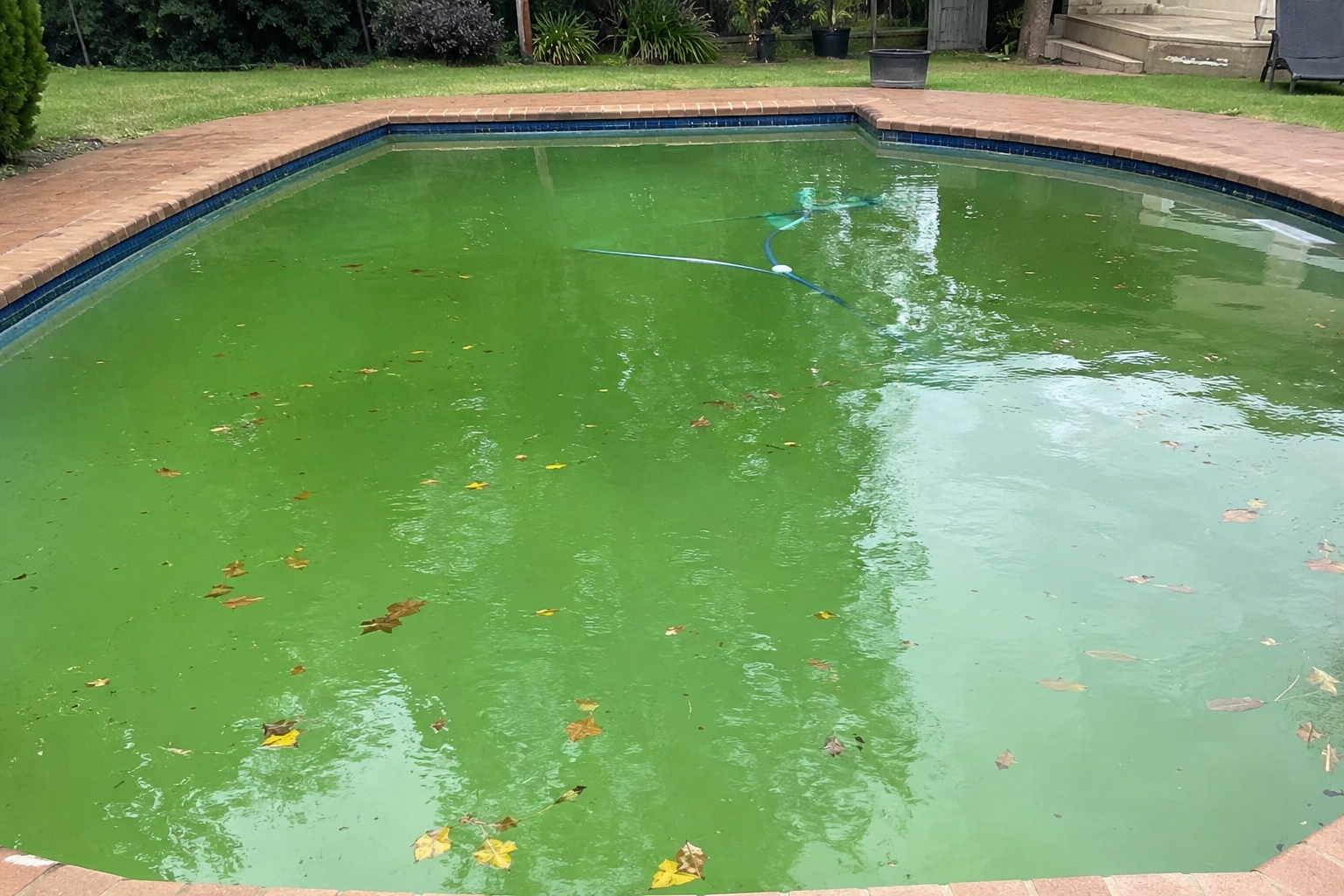
A swimming pool can look perfectly clear before a storm, then suddenly turn cloudy or green after a night of heavy rain. This is one of the most common problems homeowners experience during Johannesburg’s rainy season, especially during periods of frequent thunderstorms and hot weather.
Many people assume the rain itself is the direct cause, but that is only part of the problem.
What actually happens is that storms disrupt the balance your pool needs to stay clean. Rainwater dilutes chlorine, debris enters the pool, filters become strained, and algae suddenly gets the opportunity to spread much faster than normal.
In Johannesburg and other parts of Gauteng, warm temperatures make the situation even worse. Once algae starts growing, it can spread surprisingly quickly, sometimes within a day or two after heavy rainfall.
For some homeowners, this becomes a repeating cycle throughout summer. The pool gets cleaned, the water improves, another storm arrives, and the same problem starts all over again.
In many cases, the storm simply exposes maintenance issues that were already developing beneath the surface.
Get Professional Pool Maintenance Services in Johannesburg
Fill in the form below to get expert help with green pool water, algae problems, and swimming pool maintenance.
Why Pools Turn Green After Rain
A swimming pool depends on stable water chemistry and proper circulation to remain clear. Heavy rain affects both at the same time.
When large amounts of rainwater enter the pool, chlorine levels become diluted. Chlorine is responsible for sanitising the water and preventing algae growth, so once chlorine drops below effective levels, algae spores already present inside the pool begin multiplying rapidly.
This becomes even more noticeable after Johannesburg thunderstorms because storms rarely bring only rain. Strong winds blow dust, leaves, grass, pollen, insects, and other organic debris directly into the water. All of this contamination places additional strain on the chlorine because the chemicals now need to work harder to keep the water sanitised.
Warm temperatures also play a major role.
Algae thrives in warm water, especially when chlorine levels are unstable. Gauteng’s summer weather creates ideal conditions for algae growth, particularly after heavy rain followed by sunshine and heat the next day.
This is why many homeowners notice that their pool turns green almost overnight after storms.
In some cases, algae may already exist inside the pool before the rain starts, even if the water still appears clean. The storm simply creates the perfect conditions for the algae bloom to become visible very quickly.
Pools with weak circulation or poor filtration usually experience the worst problems because stagnant water allows algae to spread much faster.
How Rain Affects Pool Chemistry
Rainwater affects far more than just chlorine levels.
One of the biggest problems after storms is that the entire chemical balance inside the pool becomes unstable. Even a properly maintained pool can struggle after prolonged rainfall because the water chemistry changes so quickly.
As chlorine becomes diluted, it loses its ability to control algae effectively. At the same time, pH levels often shift outside their ideal range. When pH becomes too high or too low, chlorine stops working efficiently, even if chlorine is still present in the water.
This is where many homeowners become frustrated.
They continue adding chlorine, but the water still remains cloudy or green because the chemistry itself is no longer balanced properly.
Organic contamination creates another challenge. Stormwater carries dirt and debris into the pool, increasing the amount of organic matter inside the water. Chlorine gets consumed rapidly while trying to break down this contamination, leaving even less protection against algae growth.
Heavy storms also place extra strain on filtration systems.
Skimmer baskets fill with leaves and debris, filters become dirty faster, and circulation weakens. Once circulation drops, algae begins developing more easily in corners, steps, and low-flow areas where the water is not moving effectively.
This combination of diluted chlorine, unbalanced chemistry, and poor circulation is usually what causes a green pool after rain.
Why Green Pool Problems Are So Common in Gauteng
Johannesburg weather creates ideal conditions for recurring algae problems during storm season.
Hot temperatures, strong sunlight, and regular summer rainfall create constant fluctuations in pool chemistry. Pools exposed to direct sun for most of the day often struggle the most because sunlight naturally weakens chlorine over time.
When heavy rain follows a hot day, chlorine levels can drop extremely quickly.
Storms in Gauteng also tend to bring large amounts of wind and airborne debris. Dust, soil, pollen, leaves, and grass frequently end up inside the pool before the rain has even started properly.
Many homeowners underestimate how much contamination enters the water during storms.
Even pools that appear relatively clean may contain significant organic contamination after heavy weather. This forces the pool chemicals and filtration system to work much harder than usual.
Inconsistent maintenance makes the problem even worse.
A pool with dirty filters, blocked baskets, poor circulation, incorrect pH levels, or weak chlorine levels may appear manageable under normal conditions. However, storms quickly expose these weaknesses.
This is why algae pool Johannesburg problems become especially common during rainy periods.
A properly maintained pool usually recovers far faster after storms than a neglected one.
The Most Common Mistakes Homeowners Make After Rain
One of the biggest mistakes homeowners make is waiting too long before checking the pool after heavy rain.
Many people assume the water will recover on its own once the storm passes, but algae can begin spreading very quickly when chlorine levels remain low for too long.
Another common mistake is adding chlorine without testing the water properly first.
If pH levels are badly unbalanced, chlorine may not work effectively regardless of how much gets added. This often leads to frustration because homeowners continue adding chemicals while the water remains cloudy or green.
Ignoring the filtration system is another major problem.
After storms, skimmer baskets and filters often become clogged with debris. If circulation remains poor, algae growth becomes much easier even when chemical levels improve.
Some homeowners also reduce pump running times too much in an attempt to save electricity. During rainy periods, proper circulation becomes even more important because contaminants enter the water far more frequently.
Poor brushing habits contribute as well. Algae often begins attaching itself to pool walls and steps before the water turns visibly green. Without regular brushing, these early algae formations become harder to remove later.
How to Stop Your Pool Turning Green After Rain
Preventing algae growth starts long before the storm arrives.
Pools that are maintained consistently throughout the season are far less likely to turn green after heavy rainfall. Stable chlorine levels, proper circulation, and clean filtration systems give the pool a much stronger ability to recover after storms.
Once rain has passed, the pool should be checked as soon as possible. Debris should be removed quickly before it begins affecting the chemistry further.
During storm season, homeowners should:
- Test chlorine and pH levels regularly
- Remove leaves and debris immediately
- Clean skimmer baskets and filters frequently
- Brush pool walls and steps
- Shock the pool when necessary
- Ensure the pump runs long enough for proper circulation
Small maintenance habits make a major difference over time.
Many severe algae outbreaks begin as minor chemical imbalances that were ignored for too long.
Get Professional Pool Maintenance Services in Johannesburg
Fill in the form below to get expert help with green pool water, algae problems, and swimming pool maintenance.
Why Some Pools Keep Turning Green Repeatedly
If your pool turns green after nearly every storm, there is usually a deeper issue involved.
Recurring algae problems often point to poor circulation, failing pumps, dirty filters, hidden leaks, incorrect chemical balancing, or aging pool surfaces that allow algae to attach more easily.
Older marbelite finishes can become rough and porous over time, making algae much harder to control. Even with regular chemical treatment, algae may continue returning because it attaches itself more easily to worn surfaces.
Hidden equipment problems can create similar issues.
A weak pump or partially blocked filtration system may still appear to function normally while failing to circulate water effectively enough to prevent algae growth during rainy periods.
This is why some pools remain difficult to maintain no matter how much chlorine gets added.
The real issue is often circulation and maintenance consistency rather than the rain itself.
When Professional Pool Maintenance Becomes Necessary
Some green pool problems can be resolved fairly easily, while others require professional attention.
If the water continues turning green shortly after treatment, or if algae returns repeatedly after storms, there may be an underlying issue that needs proper inspection.
Professional pool maintenance services help identify the root cause instead of only treating the symptoms temporarily.
An experienced maintenance team can assess water chemistry properly, inspect pumps and filters, identify circulation problems, and recommend long-term solutions that help prevent recurring algae outbreaks.
For homeowners dealing with pool goes green after storm problems every rainy season, professional maintenance often saves significant time, frustration, and chemical costs over the long term.
A properly maintained swimming pool should remain clean, balanced, and healthy even during Johannesburg’s heaviest summer storms.
Get Professional Pool Maintenance Services in Johannesburg
Fill in the form below to get expert help with green pool water, algae problems, and swimming pool maintenance.


Comments are closed