



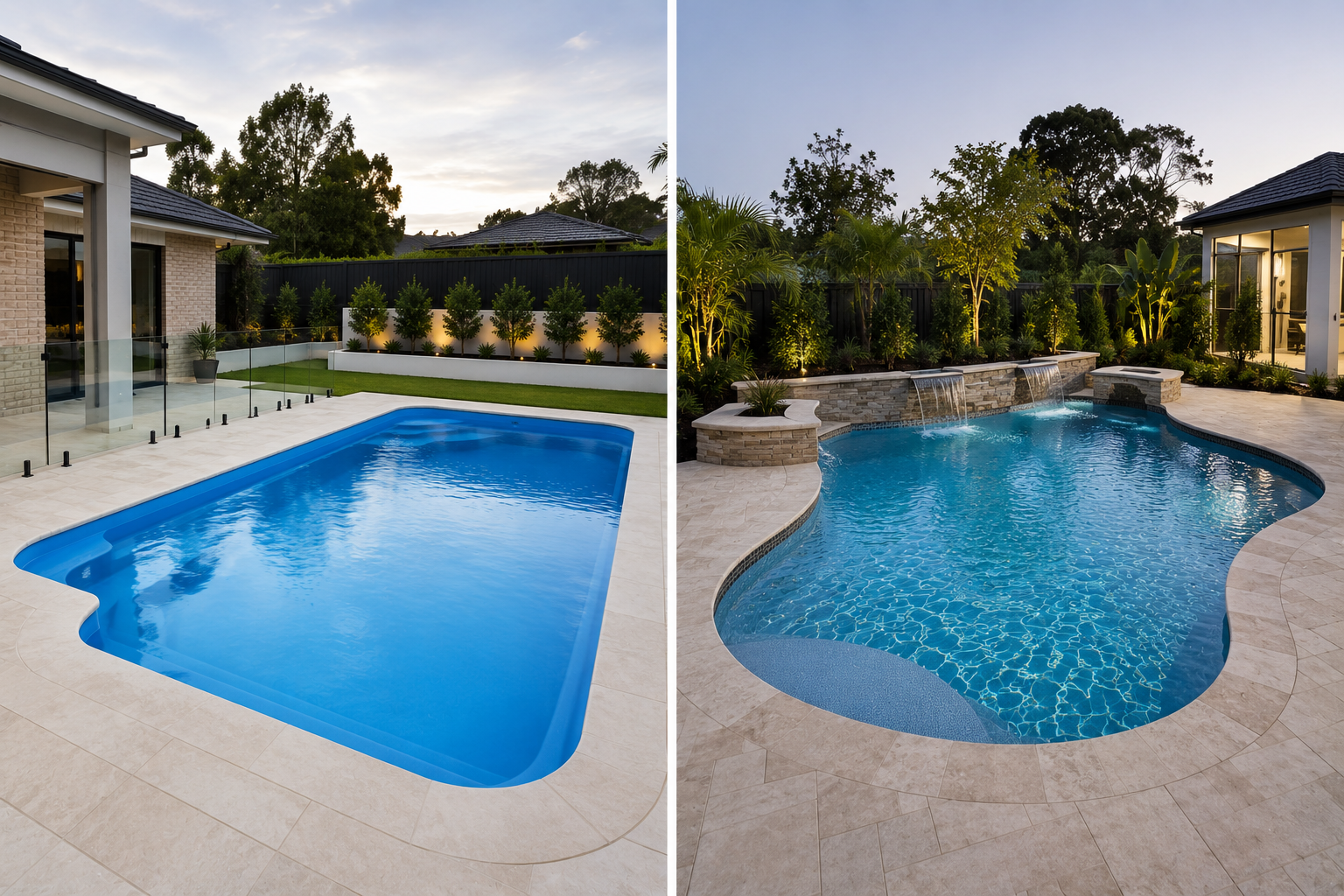
Choosing between a fibreglass and concrete pool is one of the biggest decisions homeowners make when planning a swimming pool in Johannesburg. Both options can completely transform a property, improve outdoor living and create a great entertainment space for family and friends. However, the experience of owning each type of pool can be very different over the years.
Some homeowners focus mainly on appearance, while others care more about maintenance, durability or installation costs. In Johannesburg, local conditions like weather patterns, soil movement, water usage and property layouts also influence which option works best.
A pool is a long-term investment, which means the decision should go beyond simply choosing the style that looks best in photographs. Understanding how fibreglass and concrete pools compare in real-life ownership can help you avoid expensive maintenance problems and unnecessary frustration later.
If you are comparing a fibreglass vs concrete pool South Africa homeowners commonly install, this guide explains the key differences and what you should realistically expect from each option.
Get Expert Advice on the Best Pool Type for Your Home
Not sure what your pool needs? Send us a quick message and we’ll help you figure it out.
Understanding the Main Difference Between Fibreglass and Concrete Pools
The biggest difference between fibreglass and concrete pools is how they are constructed.
Fibreglass pools are manufactured in a factory using reinforced fibreglass materials. The complete shell is transported to the property and lowered into the excavated area using specialised equipment. Once installed, plumbing, backfilling and surrounding finishes are completed.
Concrete pools, often referred to as gunite pools, are built entirely on-site. The construction process usually involves excavation, steel reinforcement, sprayed concrete or gunite application, curing, waterproofing and finishing. Every stage is completed directly at the property.
Because the construction methods are completely different, everything from installation timelines to maintenance requirements changes as well.
For many Johannesburg homeowners, the decision often comes down to practicality versus customisation. Fibreglass pools are usually associated with convenience and lower maintenance, while concrete pools are often chosen for design flexibility and luxury customisation.
Neither option is automatically better in every situation. The right choice depends on the property, budget and long-term expectations.
Installation Time and Construction Process
Installation time is one of the biggest reasons many homeowners lean toward fibreglass pools.
A fibreglass pool can often be installed much faster than a concrete pool because the shell arrives pre-manufactured. Once excavation is complete and site preparation has been done correctly, the shell can be positioned quickly. Depending on the project scope, some installations can be completed within days rather than weeks.
This shorter construction period is especially attractive for Johannesburg homeowners who want less disruption to their property and daily routine.
Concrete pools take considerably longer because every stage happens on-site. After excavation, steel reinforcement must be installed before the gunite or concrete application begins. The structure then needs time to cure properly before waterproofing and finishing work can continue.
Weather can also affect timelines significantly. Heavy rain during Johannesburg summer storms may delay certain stages of concrete construction.
While the longer process may sound inconvenient, many homeowners accept the extra time because of the freedom concrete construction allows. Complex shapes, unusual dimensions and luxury features are often easier to achieve with concrete pools.
For standard residential installations, however, fibreglass pools are generally the faster and more straightforward option.
Which Pool Costs More in South Africa?
Cost is one of the first things homeowners consider when comparing a concrete pool vs fibreglass pool.
In most cases, concrete pools are more expensive overall. This is mainly because the construction process is more labour-intensive and requires more materials, engineering and finishing work.
The total project cost depends on the size of the pool, property access, excavation difficulty, soil conditions, finishes and additional features like heating or decking. Concrete pools often become more expensive because custom construction naturally involves more site work and longer labour hours.
Fibreglass pools are generally more affordable because the shell is factory-manufactured and installation is faster. Costs are often easier to predict, which many homeowners appreciate during budgeting.
That said, premium fibreglass pools with luxury finishes, heating systems, lighting and decking can still become expensive depending on the overall project design.
Johannesburg homeowners should also consider long-term ownership costs, not just the initial installation price. Maintenance, resurfacing and repairs can significantly affect the true cost of pool ownership over time.
Request a Pool Installation Quote in Johannesburg
Planning a new swimming pool for your home? Get a professional quote tailored to your property, budget and preferred pool type.
Maintenance Differences Between Fibreglass and Concrete Pools
Maintenance is where the difference between the two pool types becomes very noticeable over the years.
Fibreglass pools are widely known for being lower maintenance. The smooth gelcoat surface resists algae growth more effectively because it is non-porous. Dirt and algae have a harder time attaching to the surface, which means less brushing and often lower chemical usage.
For busy homeowners, this simpler maintenance routine can become a major advantage.
The smooth finish also feels softer underfoot and is generally easier to clean. Many fibreglass pool owners find that routine maintenance requires less effort compared to concrete pools.
Concrete pools require more regular attention because the surfaces are naturally more porous. Algae can attach more easily to marbelite or plaster finishes, especially if water chemistry is inconsistent.
As the surface ages, it may also become rougher, which increases cleaning requirements and can affect swimmer comfort.
Chemical balancing can also become slightly more demanding in concrete pools because the surface interacts differently with the pool water.
This does not mean concrete pools are difficult to own, but they do typically require more consistent maintenance over the long term.
For homeowners looking for the easiest possible ownership experience, fibreglass usually has the advantage.
Durability and Lifespan
Both fibreglass and concrete pools can last for many years when installed properly and maintained correctly.
Concrete pools are often perceived as stronger because of the solid structure, but modern fibreglass pools are also extremely durable. The materials used today are far more advanced than older fibreglass systems from decades ago.
One advantage of fibreglass is that the shell has a slight degree of flexibility. In Johannesburg areas where minor soil movement occurs, this flexibility can help absorb some ground movement without cracking.
Concrete pools are rigid structures. While they are incredibly strong, movement in unstable soil conditions can sometimes lead to cracks if the engineering or installation are not done correctly.
The quality of workmanship matters enormously with both pool types.
A poorly installed concrete pool can develop structural issues, while a poorly installed fibreglass pool may shift, settle incorrectly or experience plumbing problems.
Professional installation is always more important than simply choosing one material over another.
Design Flexibility and Appearance
Concrete pools are widely regarded as the best option for fully customised designs.
Because the pool is constructed entirely on-site, homeowners have almost complete freedom over the final shape, depth and layout. This makes concrete pools especially popular in luxury homes or architect-designed properties where a completely unique outdoor design is important.
Fibreglass pools are manufactured using moulds, so homeowners choose from pre-designed shapes and sizes. While there are many modern styles available today, there are still limitations compared to custom concrete construction.
However, many Johannesburg homeowners find that modern fibreglass designs already meet their needs perfectly well.
Contemporary fibreglass pools are available in sleek shapes, elegant colours and modern layouts that suit both compact and large properties.
For most family homes, the available design choices are more than sufficient.
The decision usually comes down to whether complete customisation is necessary for the project.
Which Pool Performs Better in Johannesburg Weather?
Johannesburg weather conditions can affect pool performance more than many homeowners realise.
The city experiences intense summer sunlight, seasonal storms and fairly cool winter temperatures. These conditions influence water temperature, surface wear and maintenance requirements.
Fibreglass pools tend to retain heat slightly better because the shell material does not absorb heat in the same way concrete does. This can help maintain more comfortable swimming temperatures naturally.
The smooth gelcoat surface also remains comfortable underfoot during hot summer days.
Concrete pools absorb and release heat differently depending on the surface finish used. Darker finishes may retain heat better, while lighter finishes may keep the surface cooler.
Both pool types perform well in Johannesburg climates when properly maintained, although fibreglass often offers slightly more comfort in terms of surface feel and heat retention.
Long-Term Repairs and Renovation Costs
Every swimming pool eventually requires repairs or renovation work at some stage.
Fibreglass pools may require gelcoat repairs, surface polishing, crack repairs or relining as they age. In many cases, these repairs are relatively localised and quicker to complete.
Concrete pools usually require more extensive renovation work over time. Surfaces may need resurfacing, waterproofing may need repair and older marbelite finishes can deteriorate after years of exposure.
Tile repairs and structural crack repairs can also become expensive depending on the age and condition of the pool.
Long-term ownership costs are one reason many homeowners searching for the best pool type in Johannesburg increasingly favour fibreglass installations.
That said, properly maintained concrete pools can also remain in excellent condition for decades.
Speak to a Johannesburg Pool Specialist
Have questions about pool installation, maintenance or long-term costs? Our team can help you compare fibreglass and concrete pools with confidence.
Property Value and Lifestyle Benefits
A professionally installed swimming pool can significantly improve the appeal and usability of a property.
Both fibreglass and concrete pools can add value when designed properly and integrated well with the surrounding outdoor area.
The overall visual impact depends heavily on landscaping, decking, lighting, paving, water features and outdoor entertainment areas.
A beautifully designed fibreglass pool can look just as impressive as a luxury concrete installation when combined with high-quality finishes and landscaping.
Concrete pools still maintain a strong reputation for premium luxury projects, especially in large architectural homes where custom design is important.
For many families, however, the day-to-day ownership experience matters more than complete customisation.
A pool that is easier to maintain, simpler to clean and faster to install often becomes the more practical choice.
So, Which Pool Type Is Better?
The right choice depends on your priorities, budget and long-term expectations.
Fibreglass pools are usually better suited to homeowners who want faster installation, lower maintenance requirements, easier cleaning and more predictable long-term ownership costs.
Concrete pools are often preferred by homeowners who want complete design flexibility, unique layouts, luxury customisation and high-end architectural integration.
In Johannesburg, fibreglass pools have become increasingly popular because they suit modern lifestyles and offer simpler long-term ownership.
Concrete pools remain an excellent option for homeowners wanting a highly customised outdoor entertainment space.
The best decision comes from understanding your budget, property layout, maintenance expectations and long-term goals before construction begins.
Get Professional Help Choosing the Right Pool for Your Home
Choosing the right swimming pool starts with expert planning. Get personalised advice for your Johannesburg home and find the best solution for your space and lifestyle.


Comments are closed